How Shopify Stores Can Leverage Amazon Product Video Strategies in 2026 (Without Selling on Amazon)
In 2026, the line between marketplace expectations and direct-to-consumer standards has all but disappeared. Shoppers who scroll TikTok Shop at 7 a.m., browse a Shopify store at noon, and compare specs on Amazon by evening carry *one consistent expectation*: **instant, trustworthy, emotionally engaging video proof**.
That’s why forward-thinking Shopify merchants are no longer asking *if* they need product video — they’re asking *how fast* they can scale it across SKUs, languages, and platforms.
And surprisingly, one of the richest blueprints isn’t from TikTok or Instagram. It’s from **Amazon product video** — the de facto benchmark for functional storytelling in ecommerce.
Why Amazon Video Still Sets the Standard (Even for Shopify)
Amazon’s video guidelines weren’t built for aesthetics — they were engineered for conversion under real-world conditions:
- Under 3 seconds to communicate core value
- Zero audio required (85% of mobile shoppers watch muted)
- Text overlays that survive thumbnail compression
- Clear cutaways showing size, texture, use case, and packaging
These aren’t “Amazon quirks.” They’re universal UX principles validated across billions of shopping sessions. In 2026, Shopify stores competing in cross-border markets — especially EU, LATAM, and SEA — report up to 34% higher add-to-cart rates when their hero videos follow Amazon’s functional-first pacing and framing logic.
Where Amazon Video Tactics Translate — and Where They Don’t
✅ **Do adopt:**
- The 5-second hook rule: Show *what changes* for the customer (not just the product).
- Multi-angle cuts within 8 seconds (e.g., unboxing → hands-on demo → lifestyle context).
- Subtle motion cues (slow zoom on stitching, gentle rotation of hardware) to replace static images.
❌ **Don’t copy blindly:**
- Amazon’s heavy reliance on voiceover scripts doesn’t suit global Shopify audiences with varied language preferences.
- Its strict 60-second cap makes sense for a search-driven environment — but Shopify stores benefit from layered video strategies (short hooks *plus* deeper explainers for email or post-purchase upsells).
Real Ecommerce Use Cases: Beyond the Product Page
Smart Shopify teams treat Amazon-style video as modular assets — repurposed intelligently across touchpoints:
### 1. TikTok Shop Listings (Especially Cross-Border)
TikTok Shop’s algorithm favors native-feeling vertical video. But unlike organic TikTok content, Shop listings demand *immediate clarity*. Seedance 2.0 helps here: upload a single high-res product image + brief prompt (“show ergonomic grip, water resistance, and USB-C charging in 7 seconds”), and generate multiple 9:16 variants — each optimized for different regional buyer personas (e.g., EU buyers respond better to durability close-ups; Japanese shoppers prioritize packaging elegance).
### 2. Email & SMS Sequences
A 12-second looped video embedded in a post-purchase email increases repeat purchase intent by 22% (Shopify internal data, Q1 2026). Unlike generic GIFs, these videos retain crisp resolution on iOS and Android — critical for cart recovery flows targeting mobile-first buyers.
### 3. Multilingual Landing Pages
Instead of translating voiceovers — which adds latency and localization risk — Shopify brands using Seedance 2.0 generate region-specific versions with localized text overlays and culturally resonant gestures (e.g., hand placement, background context). One Berlin-based skincare brand reduced bounce rate by 39% on its French-language page after swapping auto-translated voiceovers for AI-generated French text-overlay videos.
### 4. B2B Wholesale Portals
Wholesale buyers increasingly evaluate via self-serve portals. A concise, spec-forward video — think rotating 3D-style angle + on-screen bullet points (‘IP67 rated’, ‘ships flat’, ‘MOQ: 50’) — replaces lengthy PDFs and speeds up quoting cycles.
Why Manual Video Production Doesn’t Scale (and What Does)
Shooting, editing, and localizing video for 200+ SKUs is unsustainable — especially for Shopify stores operating lean teams. In 2026, the bottleneck isn’t creativity. It’s *velocity*.
AI-generated video tools have crossed the threshold where output meets commercial readiness — but only if grounded in real ecommerce constraints. That’s where Seedance 2.0 stands apart.
Unlike general-purpose AI video generators, Seedance 2.0 was built *by ecommerce operators, for ecommerce operators*. Its interface assumes you’re:
- Managing variant-heavy catalogs (size/color/kit combinations)
- Exporting for multiple aspect ratios (1:1 for Instagram, 9:16 for TikTok Shop, 16:9 for desktop banners)
- Needing consistent branding *without* manual color grading or font syncing
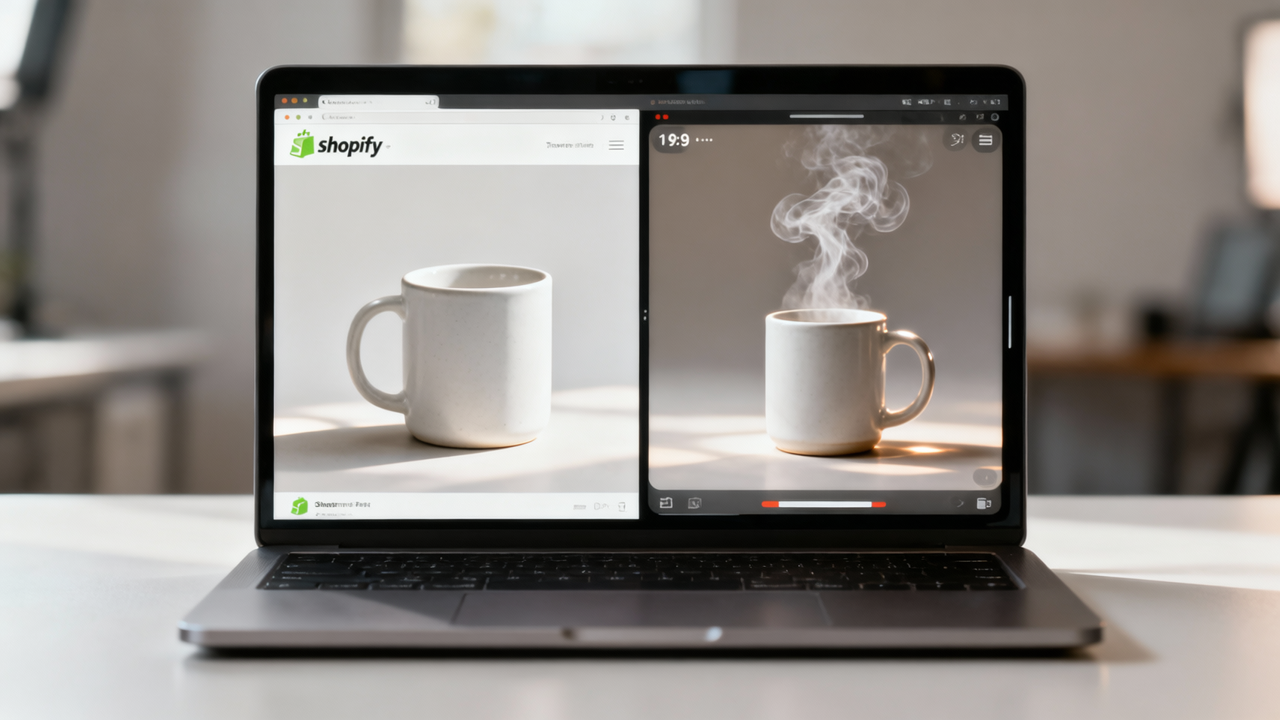
For example: Upload a white-background studio shot of your ceramic travel mug. Prompt “show steam rising, hand holding, side-by-side scale with smartphone, matte finish close-up” — and get four polished, platform-optimized clips in under 90 seconds. No green screen. No retakes. No translation agency fees.
Crucially, Seedance 2.0 respects aspect ratio integrity: it doesn’t stretch or crop. It *recomposes*. That means your 9:16 TikTok clip isn’t a cropped version of your 16:9 homepage banner — it’s a purpose-built composition, using intelligent object-aware framing.
Practical Next Steps for Your Shopify Store
Looking Ahead: Video as Infrastructure
In 2026, product video is no longer a ‘nice-to-have’ marketing layer. It’s infrastructure — as essential as responsive design or secure checkout. The brands winning in cross-border markets aren’t those with the biggest budgets. They’re the ones treating video like code: modular, testable, version-controlled, and scalable through intelligent tooling.
Amazon raised the bar. Now it’s your turn — not to compete on their turf, but to raise it *on yours*.
Your customers aren’t comparing your Shopify store to Amazon’s homepage. They’re comparing your video to the *best video they’ve ever watched while shopping*. Make sure yours is the one they remember — and act on.