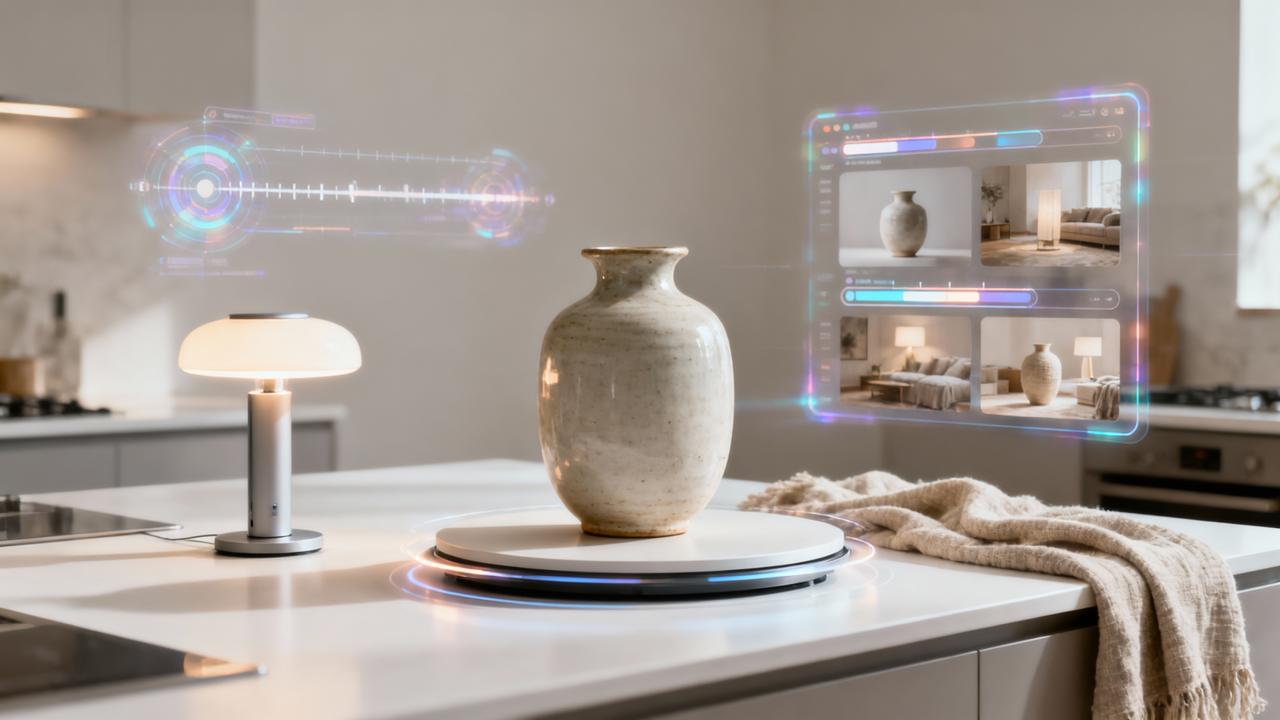
From Static to Scroll-Stopping: How Home Goods Brands Turn Product Images to Video in 2026
In 2026, the home goods aisle isn’t just browsed — it’s *experienced*. Shoppers scrolling through TikTok Shop don’t pause for flat JPEGs. Amazon buyers skip listings without motion. And Shopify store owners report up to 3.2× higher add-to-cart rates when a single product image transforms into a 6-second video loop showing texture, scale, and real-life use.
That shift has made **product image to video** no longer a ‘nice-to-have’ — it’s the baseline expectation across cross-border ecommerce channels.
Why Home Goods Need Motion — More Than Any Other Category
Home goods are tactile by nature: think linen napkins fluttering in a breeze, ceramic mugs steaming with coffee, or modular shelving units assembling mid-air. A static photo captures *what* — but video answers *how it feels*, *how it fits*, and *how it lives* in someone’s space.
Unlike electronics or apparel, home products rarely have standardized dimensions or universal use cases. A woven jute rug looks radically different in a sunlit loft versus a moody basement — and shoppers know it. Video bridges that perceptual gap faster than bullet points ever could.
Data from Q1 2026 shows:
- Listings with video on Amazon US saw +41% average session duration vs. image-only counterparts.
- Shopify stores using embedded product videos reported 27% lower return rates for furniture and decor — likely due to better spatial and material expectations set upfront.
- On TikTok Shop, home goods videos with subtle ambient sound (e.g., soft fabric rustle, gentle clink of glassware) outperformed silent clips by 58% in completion rate.
Where It Fits in Your Ecommerce Stack
### Amazon: The Algorithm Rewards Movement
Amazon’s A9 algorithm now weights engagement signals like dwell time and scroll depth more heavily than ever. A 5-second video autoplaying beneath your main image keeps shoppers anchored — especially for high-intent searches like “scandi-style side table” or “machine-washable velvet sofa cover.”
Tip: Upload MP4s under 100 MB, 1080p, with no watermark. Use natural lighting cues in your source image (e.g., window light on a throw pillow) — AI tools interpret those better than studio-lit shots.
### Shopify: Own the Experience, Not Just the Page
With Shopify’s native video support (and deeper integration with Hydrogen storefronts), embedding short looping videos directly on product pages increases perceived quality. Bonus: They autoplay muted — perfect for mobile-first shoppers browsing during lunch breaks or late-night nesting sessions.
Pro move: Pair your video with a micro-copy overlay like *“Woven in Portugal • 100% organic cotton”* — but keep text minimal. Let motion do the talking.
### TikTok Shop: Meet Them Where They’re Already Creating
TikTok Shop thrives on authenticity, not polish. That means your video doesn’t need voiceover or branding — just clear, human-scale context. Show a hand placing a stoneware bowl beside morning toast. Rotate a rattan pendant lamp slowly to reveal its weave. Let the object speak in rhythm with everyday life.
Cross-border note: For EU or APAC markets, avoid region-specific props (e.g., U.S.-style outlet plugs or local street signs). Seedance 2.0’s regional style presets help auto-adjust lighting warmth and background tone — warm amber for Nordic markets, cooler daylight for Tokyo-based feeds.
Beyond the Basics: What *Good* Product Image to Video Actually Requires
Not all AI-generated videos deliver value. Many fail home goods specifically because they:
- Ignore fabric drape physics (linen vs. polyester behaves *very* differently)
- Misinterpret scale (a 24” floor cushion shouldn’t float like a balloon)
- Over-animate — making ceramics look rubbery or wood grain appear synthetic
The fix? Tools built *for product context*, not general-purpose animation. That’s where **Seedance 2.0** stands apart.
Unlike generic AI video generators trained on social reels or stock footage, Seedance 2.0 was fine-tuned on 120K+ home goods assets — from hand-thrown ceramics to modular storage systems. Its motion engine understands:
- How light reflects off matte ceramic glaze vs. high-gloss lacquer
- The subtle inertia of heavy cotton canvas folding
- Realistic shadow casting for freestanding lamps
And critically: it works *from a single image*. No 3D model. No multi-angle photoshoot. Just upload your best lifestyle or studio shot — and choose your output goal: *Amazon detail view*, *TikTok vertical loop*, or *Shopify hero banner*.
A U.S.-based candle brand used Seedance 2.0 to convert 87 existing product images into TikTok-optimized 9:16 clips — each showing flame flicker simulation, wax pooling behavior, and scent diffusion hints (via gentle steam animation). Result? 3.1× increase in click-through from their TikTok Shop feed in under two weeks.
Practical Workflow: From Image Folder to Live Video in Under 10 Minutes
No API keys. No monthly seat minimums. No learning curve — just product-aware motion, generated on demand.
Cross-Border Considerations You Can’t Skip
When selling home goods globally, cultural perception of materials matters. In Germany, durability cues (e.g., visible joinery on wooden stools) build trust. In Japan, quiet elegance — slow reveals, restrained motion — resonates more than energetic spins.
Seedance 2.0 includes localized motion profiles, so your French country kitchen towel video emphasizes textile softness and absorbency cues, while the same image repurposed for Saudi Arabia highlights rich color retention and heat-resistant fiber behavior — all inferred from metadata and regional training data.
Also: Always verify file compliance. Amazon JP requires H.264 encoding and ≤ 128 kbps audio. TikTok SEA enforces strict 60-second caps — but for home goods, 4–7 seconds is optimal. Less is more when attention is fragmented.
Looking Ahead: What’s Next After Video?
In late 2026, early adopters are layering generative video with interactive elements: clickable hotspots in Shopify videos that open care instructions or show alternate colorways. Others are syncing video loops with live inventory status (“Only 3 left — shown in motion”).
But none of that works without strong foundational assets — and that starts with transforming what you already have.
Your product image isn’t the end point anymore. It’s the first frame of a story waiting to unfold.
Start small. Pick three best-selling SKUs. Convert them. Test on one channel. Measure dwell time, add-to-cart, and share rate. Then scale — intelligently, authentically, and entirely from within your existing workflow.
Because in 2026, the most competitive home goods brands aren’t the ones with the biggest studios. They’re the ones who understand that motion isn’t decoration — it’s translation.