Cross-Border Ecommerce Video: How DTC Brands Win Global Attention in 2026
In 2026, over 68% of global online shoppers say they’re *more likely to purchase* after watching a localized video—especially when it reflects their language, aesthetics, and shopping habits. For direct-to-consumer (DTC) brands, this isn’t just about translation. It’s about cultural resonance, platform-native pacing, and rapid adaptation across markets—from German-speaking EU buyers scrolling TikTok Shop to Japanese consumers browsing Amazon.co.jp.
That’s where **cross-border ecommerce video** becomes your silent sales ambassador.
Why Video Is the #1 Trust Accelerator for International Buyers
Unlike static images or text, video conveys tone, authenticity, and context instantly—critical when you lack physical storefronts or local brand recognition. In markets like Brazil, South Korea, and the UAE, customers consistently rate video demos, unboxings, and real-life usage clips as *more trustworthy* than written specs—even when subtitles are used instead of full dubbing.
But here’s the catch: producing high-quality, localized video at scale remains a bottleneck. Traditional workflows—scripting, casting, filming, editing, subtitling, A/B testing—can take 3–6 weeks per market. By then, trends shift, promotions expire, and competitors launch faster alternatives.
Platform-Specific Video Strategies That Actually Convert
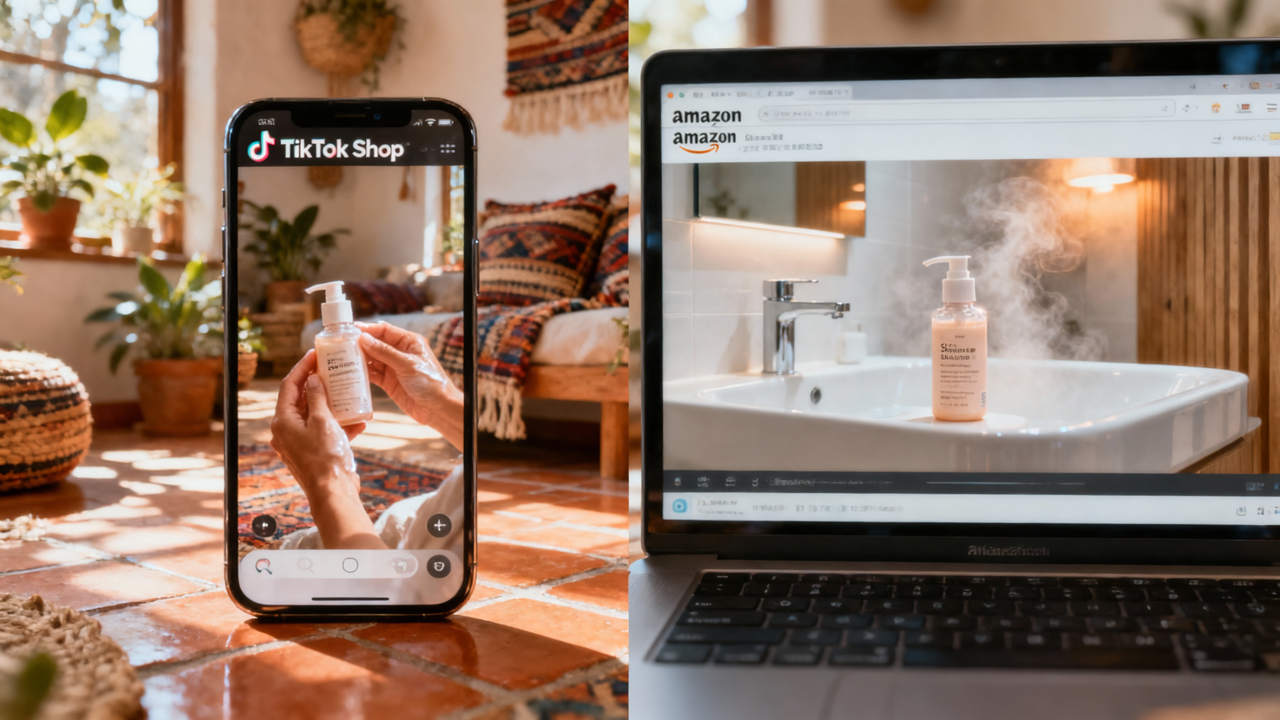
One-size-fits-all video doesn’t work across borders—or platforms. What thrives on TikTok Shop in Mexico flops on Amazon Germany. Here’s how top-performing DTC brands adapt:
### ✅ TikTok Shop (LatAm, SEA, MENA)
- **Format**: 9–16 second vertical loops with bold captions, quick cuts, and trending audio cues (localized, not translated)
- **Use case**: Product “aha” moments—e.g., a skincare serum visibly absorbing in under 5 seconds, paired with Spanish-language voiceover saying *“¡Sin brillo, sí a la hidratación!”*
- **Tip**: Use native creators *or* AI-generated avatars trained on regional speech patterns—not generic English-to-Spanish TTS.
### ✅ Amazon (EU, JP, CA)
- **Format**: 30–45 second horizontal videos (16:9), clean lighting, minimal branding, clear product-in-context shots
- **Use case**: Comparison demos—e.g., showing your bamboo toothbrush beside plastic alternatives *on a Japanese bathroom counter*, with soft-spoken narration in natural Japanese (not formal textbook Japanese)
- **Tip**: Prioritize clarity over creativity. Amazon buyers seek confirmation—not inspiration.
### ✅ Shopify Stores (Global DTC)
- **Format**: Modular video blocks—hero banner (auto-play muted), embedded demo (play-on-click), UGC carousel (with geo-tagged captions)
- **Use case**: Layered storytelling—e.g., a 12-second intro video in French for homepage, followed by a 22-second behind-the-scenes clip filmed in your Montreal studio, subtitled in German and Arabic
- **Tip**: Let users choose language *before* video loads—reducing bounce rates by up to 37% (2026 Shopify benchmark data)
The Localization Gap—And Why Translation Isn’t Enough
Translating a US-targeted product video into five languages rarely works. Why?
- **Cultural framing**: A “fast shipping” claim means *next-day delivery* in Germany—but *within 5 business days* in Indonesia.
- **Visual norms**: Light skin tones dominate US beauty ads; Korean beauty campaigns prioritize dewy texture and subtle glow—even in AI-generated scenes.
- **Pacing & silence**: Japanese audiences expect 1.5–2 seconds of pause before key messages; Brazilian viewers prefer tighter cuts and warmer vocal energy.
That’s why leading DTC brands now treat video localization like software localization—adjusting assets *per market*, not just language.
Enter AI-Generated Video—Without the Uncanny Valley
Early AI video tools produced stiff avatars and mismatched lip-sync—damaging credibility abroad. But in 2026, advances in multimodal foundation models mean AI can now:
- Generate photorealistic, culturally grounded scenes (e.g., a cozy Stockholm apartment kitchen for a Swedish coffee brand campaign)
- Sync voice, facial expression, and gesture to regional speech rhythms—not just phonemes
- Output platform-optimized formats natively (vertical for TikTok Shop, square for Instagram Reels, 16:9 for Amazon)
This is where **Seedance 2.0** stands apart.
Unlike generic AI video generators, Seedance 2.0 is built *for ecommerce*. Its templates auto-adapt to regional visual grammar—selecting appropriate color palettes (pastels for JP, bold primaries for MX), model diversity (based on regional census data), and even background textures (marble countertops for EU, woven rattan for SEA). You upload a single English script and product image—and Seedance 2.0 delivers five localized video variants in under 90 minutes, each optimized for its target platform and audience.
Real-world use case: A Brooklyn-based sustainable activewear brand used Seedance 2.0 to launch on Amazon.co.jp and TikTok Shop Malaysia simultaneously. They generated six variants (including one with Bahasa Malaysia voiceover + Malay cultural motifs) in one afternoon. Result? 4.2x higher add-to-cart rate vs. their previous translated-video approach—and 28% lower cost per localized video.
Practical Steps to Launch Your Cross-Border Video Strategy
Beyond Video: Building Long-Term Cross-Border Trust
Video opens the door. Consistency keeps customers returning. That means:
- Updating localized videos quarterly—not just for seasonality, but for shifting platform algorithms (TikTok Shop’s 2026 “Trust Signal” update prioritizes videos with verified local creator tags)
- Using video metadata strategically: Alt-text in local language, schema markup for `videoObject`, and region-specific thumbnail previews
- Repurposing footage intelligently: A 30-second Amazon demo becomes three 8-second TikTok hooks, one 15-second Instagram Story highlight, and a looping banner for your Shopify store—all generated in parallel via Seedance 2.0’s batch export
Cross-border ecommerce video isn’t about going global *faster*. It’s about going global *wiser*—meeting customers where they are, in the language they think, and the rhythm they scroll.
And in 2026, that wisdom scales best when AI does the heavy lifting—so your team stays focused on strategy, not subtitles.