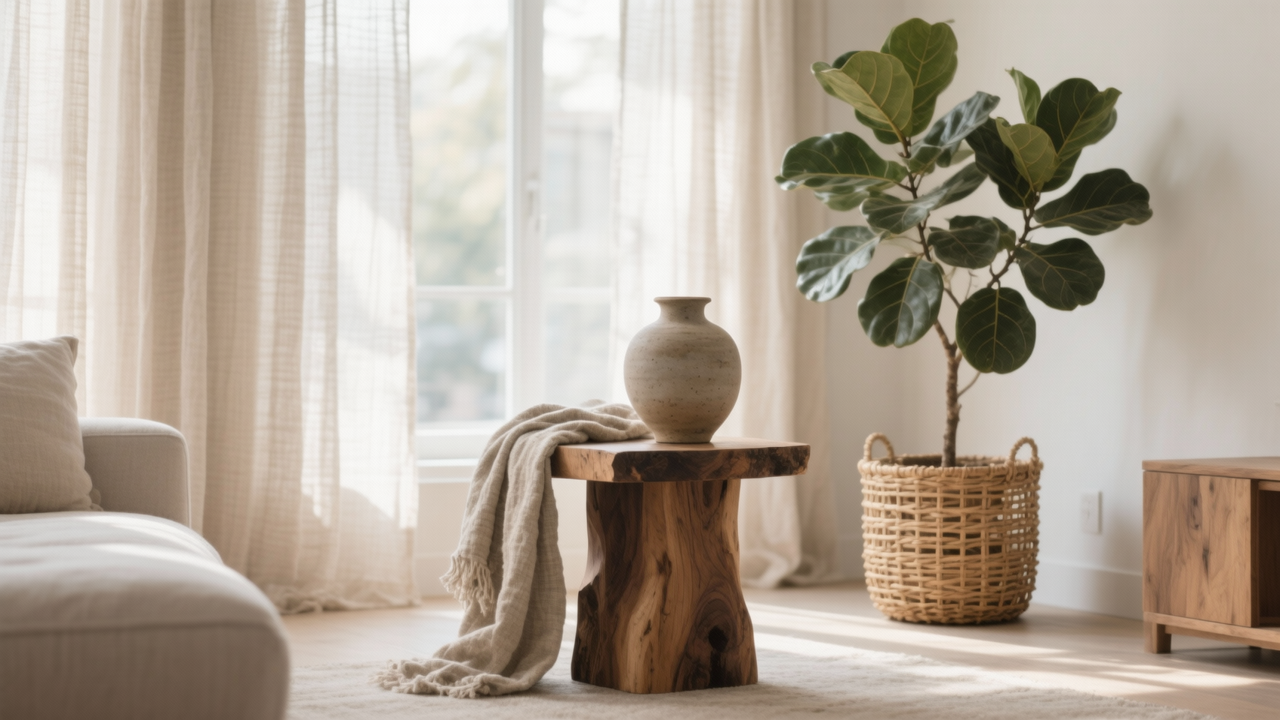
AI Image Generation for Ecommerce: Transforming Home Goods Marketing in 2026
The home goods sector — from artisanal ceramic mugs to modular shelving systems — thrives on visual storytelling. In 2026, shoppers don’t just scan specs; they imagine products *in their space*, styled with intention, lit with warmth, and contextualized with authenticity. That’s where AI image generation has evolved from novelty to necessity — especially for home goods sellers navigating Amazon’s algorithmic feeds, Shopify’s performance-optimized storefronts, and TikTok Shop’s scroll-driven discovery.
Why Home Goods Brands Are Prioritizing AI-Generated Imagery
Unlike fast-fashion or electronics, home goods rely heavily on environmental context: scale, texture, lighting, material interaction, and lifestyle resonance. A linen throw pillow isn’t sold on thread count alone — it’s sold on how it drapes over a sunlit sofa, how its weave catches morning light, how it pairs with reclaimed wood and terracotta accents.
Traditional photography struggles here. Studio shoots demand staging, props, lighting rigs, and model coordination — costly and inflexible when launching dozens of SKUs across seasonal collections or regional variants (e.g., matching sets for EU vs. APAC living rooms). AI image generation solves this by enabling rapid, scalable, and highly customizable visual production — without compromising aesthetic integrity.
Real Ecommerce Use Cases — Tested in 2026
### 1. Dynamic Background Replacement & Room Integration
Instead of retaking photos for every new backdrop, brands now generate photorealistic room scenes: Scandinavian minimalist bedrooms, sun-drenched California kitchens, compact Tokyo apartments. With precise prompt engineering — e.g., *“mid-century modern living room, natural oak flooring, soft diffused daylight, beige linen sofa, overhead view”* — AI tools produce consistent, brand-aligned environments. Seedance 2.0 enhances this with built-in spatial coherence logic: furniture scales correctly, shadows align with light sources, and fabric textures retain tactile fidelity — critical for convincing home decor visuals.
### 2. Variant Visualization Without Physical Inventory
A ceramic tableware line with 4 glazes, 3 sizes, and 2 finishes equals 24 permutations. Shooting each physically is impractical. AI image generation lets teams input base product assets (3D renders or high-res studio shots) and prompt variations: *“same mug shape, matte sage green glaze, slight condensation, placed on marble countertop beside espresso machine.”* Result? Instant, shoppable variant galleries — live on Shopify product pages within hours.
### 3. Cross-Border Localization — Visual, Not Just Linguistic
A woven rug that reads as ‘cozy’ in Berlin may feel ‘cluttered’ in Seoul. AI image generation supports cultural localization: adjusting color palettes (softer pastels for Japanese audiences), spatial density (more negative space for Nordic markets), or styling cues (tatami mats vs. hardwood floors). Seedance 2.0 includes regional style presets trained on localized home interiors — helping brands avoid tone-deaf visuals before launch.
### 4. TikTok Shop & Amazon A+ Content at Speed
TikTok Shop demands vertical, motion-first visuals — but static AI images can seed dynamic content. Generate 5–7 scene variations (e.g., “woven basket on entryway console, keys and leather wallet beside it”), then animate subtle parallax or zoom effects using Seedance 2.0’s integrated video module. Same assets feed Amazon A+ modules: lifestyle grids, comparison carousels, and ‘styled with’ suggestions — all generated from one prompt set.
Beyond Static Images: The Video Advantage
In 2026, still images alone no longer suffice. Shoppers want to *see movement*: how a velvet cushion settles, how a rotating floor lamp casts changing shadows, how a stackable planter set assembles. AI-generated videos — built directly from image prompts — close that gap. Seedance 2.0 bridges the workflow: generate a sequence of 8–12 coherent frames from a single descriptive prompt (*“slow 360° rotation of matte black ceramic vase on raw concrete shelf, ambient warm light, shallow depth of field”*), then export optimized MP4s for TikTok Shop banners or Shopify product tabs.
This isn’t about replacing human creativity — it’s about amplifying it. Designers focus on art direction and brand voice; AI handles pixel-perfect execution across formats and markets.
Practical Tips for Getting Started
- **Start with high-fidelity inputs**: Use clean, well-lit studio shots or accurate 3D models as base assets. AI interprets quality — blurry or distorted source images yield inconsistent outputs.
- **Prompt with specificity, not poetry**: Include material descriptors (*“brushed brass”, “hand-thrown stoneware”*), lighting conditions (*“north-facing window light”*), and camera intent (*“eye-level, shallow depth of field”*).
- **Batch intelligently**: Group similar products (e.g., all ceramic serveware) under one prompt architecture to maintain visual consistency across collections.
- **Validate for platform specs**: Amazon requires white backgrounds for main images; TikTok Shop favors bold contrast and center-framed subjects. Seedance 2.0 includes preset templates aligned with each channel’s technical guidelines.
- **Audit outputs manually**: While AI excels at realism, subtle inconsistencies (impossible folds in fabric, mismatched reflections) still occur. Always review at 100% zoom before publishing.
Looking Ahead: Integration, Not Isolation
The future belongs to unified creative ops — where AI image generation doesn’t sit in a silo but connects directly to PIM systems, CMS platforms, and analytics dashboards. In 2026, forward-thinking home goods brands are syncing Seedance 2.0 outputs with Shopify metafields, auto-populating Amazon Enhanced Brand Content, and feeding TikTok Shop catalogs via API — turning visual creation into a real-time, data-informed process.
AI image generation isn’t about cutting corners. It’s about reclaiming time, deepening relevance, and meeting today’s home shopper — wherever they browse — with visuals that don’t just show a product, but invite them into a life lived with it.
> *Seedance 2.0 is purpose-built for ecommerce creators who value precision, speed, and brand integrity — especially in visually driven categories like home goods. Its latest update (Q1 2026) introduces adaptive lighting simulation and multi-scene coherence — making it a natural fit for brands scaling across Amazon, Shopify, TikTok Shop, and cross-border channels.*