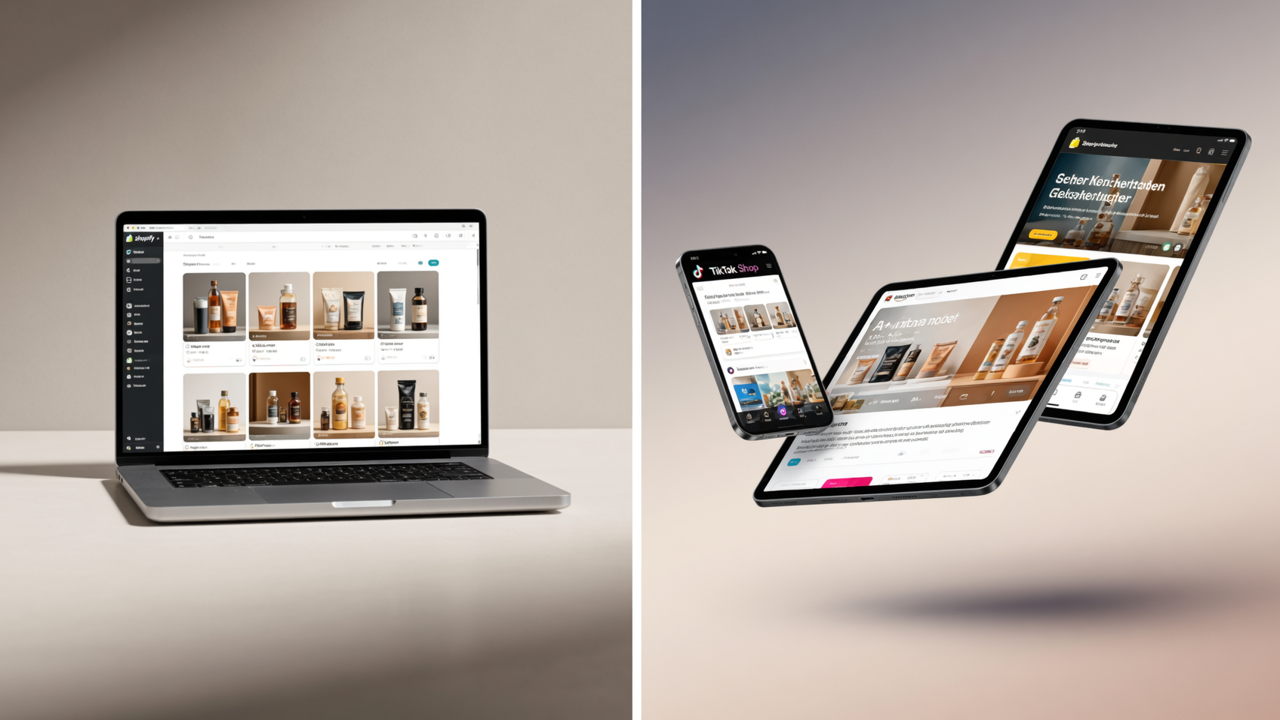
AI Image Generation for Ecommerce: Boost Conversions Across Shopify, Amazon & TikTok Shop in 2026
In 2026, visual trust is non-negotiable. Shoppers scroll past products in under 1.3 seconds—and 78% of buyers say high-quality, context-rich imagery directly influences their decision to click *add to cart*. For Shopify merchants scaling across Amazon, TikTok Shop, and global marketplaces, AI image generation isn’t a novelty—it’s operational infrastructure.
Why AI-Generated Imagery Is Now Table Stakes
Static product photos no longer match buyer expectations. Today’s shoppers want:
- Lifestyle shots showing scale, texture, and real-world use
- Multiple angles—even for variants not yet in stock
- Backgrounds tailored to regional aesthetics (e.g., minimalist white for EU, warm natural light for Southeast Asia)
- Fast iteration for seasonal campaigns or flash promotions
Traditional photography struggles here: lead times stretch 5–10 days per SKU, costs scale linearly with catalog size, and localization requires separate shoots per region. AI image generation closes that gap—*if* it delivers brand-aligned, commercially viable output.
What Works (and What Doesn’t) for Shopify Stores
Not all AI image tools are built for commerce. Here’s what separates production-ready solutions from experimental ones:
✅ **Consistent branding**: Outputs retain your logo placement, color palette, and typography rules across hundreds of SKUs.
✅ **Product fidelity**: Accurate rendering of materials (e.g., matte ceramic vs. brushed aluminum), lighting direction, and shadow behavior—not just ‘pretty’ but *plausible*.
✅ **Ecommerce-native outputs**: Built-in templates for Shopify product pages, Amazon A+ modules, TikTok Shop carousel ads, and cross-border marketplace banners (e.g., Mercado Libre’s 1200×628 spec).
❌ Generic prompts (“a red dress on a model”) → inconsistent sizing, unrealistic fabric drape, mismatched proportions.
❌ Upscaling low-res inputs → blurry textures, distorted text overlays, or broken product geometry.
Real Use Cases That Move the Needle
### 1. Rapid Catalog Expansion
A Shopify store launching 200 new SKUs for Q2 2026 used AI image generation to produce primary hero images, 360° spin mockups, and lifestyle scenes—all within 48 hours. No studio booking. No model releases. Just SKU names, color codes, and dimension specs fed into a trained pipeline. Result: 3x faster time-to-live vs. traditional workflows.
### 2. Dynamic Localization
An accessories brand selling in Canada, Germany, and Japan generated region-specific visuals using AI—same product, different context. In Germany: clean studio shots with technical close-ups. In Japan: soft-focus indoor scenes featuring subtle omotenashi-inspired styling. All assets auto-resized and labeled per marketplace requirements.
### 3. TikTok Shop & Amazon A+ Ready Assets
TikTok Shop demands motion-first creativity—but static AI images serve as perfect storyboards. Merchants use AI-generated frames to pre-visualize video sequences, then feed those into AI video tools like **Seedance 2.0** to generate shoppable 6–12 second clips. Same assets fuel Amazon A+ modules: one prompt → five variant backgrounds (wood, marble, concrete, gradient, blurred bokeh) → instantly exported as PNGs with transparent layers.
### 4. Cross-Border Visual Consistency
For brands entering LATAM or ASEAN markets, AI eliminates visual fragmentation. Instead of outsourcing to local studios with varying quality standards, teams train models on existing brand assets—then generate compliant, culturally resonant imagery at scale. No more mismatched fonts on Brazilian Portuguese banners or incorrect cultural props in Thai-facing creatives.
Integrating AI Image Generation Into Your Stack
Start small—but think ecosystem-wide:
🔹 **Phase 1 (Week 1–2)**: Replace placeholder images for low-traffic SKUs. Use AI to generate 3–5 background variations per product. Measure CTR lift in Shopify analytics.
🔹 **Phase 2 (Week 3–4)**: Automate variant visualization. Input base product + color hex + material tag → output swatch grids, side-by-side comparisons, and zoomable texture details.
🔹 **Phase 3 (Ongoing)**: Connect to your PIM or inventory API. When a new SKU syncs to Shopify, AI auto-generates and uploads compliant assets to designated collections—no manual intervention.
Tools like **Seedance 2.0** streamline this by unifying AI image and video generation in one interface. Its ecommerce mode lets you define brand guidelines once (logo position, font hierarchy, preferred lighting temperature), then apply them globally—across Shopify product galleries, Amazon detail pages, and TikTok Shop storefront banners.
Pitfalls to Avoid in 2026
- **Over-relying on default models**: Generic diffusion models often misinterpret product categories (e.g., rendering “wireless earbuds” as literal wires). Fine-tune or use commerce-optimized models.
- **Ignoring platform specs**: TikTok Shop requires 1080×1350 verticals; Amazon prefers 1600×1600 square. Export settings matter—don’t assume resize = reformat.
- **Skipping human QA**: Run AI outputs through a 3-step check: (1) Does the product look physically possible? (2) Is branding applied consistently? (3) Does the scene reflect actual usage context?
The Bottom Line
AI image generation won’t replace your creative team—but it *will* replace manual, repetitive visual tasks that slow down growth. In 2026, Shopify stores winning on Amazon and TikTok Shop aren’t those with the biggest budgets. They’re the ones treating imagery as dynamic, scalable, and deeply integrated—with AI as the engine, not the experiment.
For merchants ready to move beyond static libraries and into adaptive visual operations, tools like Seedance 2.0 offer a unified path: generate, refine, localize, and deploy—without switching tabs, APIs, or style guides.
Your next bestseller doesn’t need a photoshoot. It needs intelligent, intentional imagery—delivered before your competitor finishes editing theirs.